 Women Who Write | A Place, A Space, A Voice | Louisville, Kentucky
 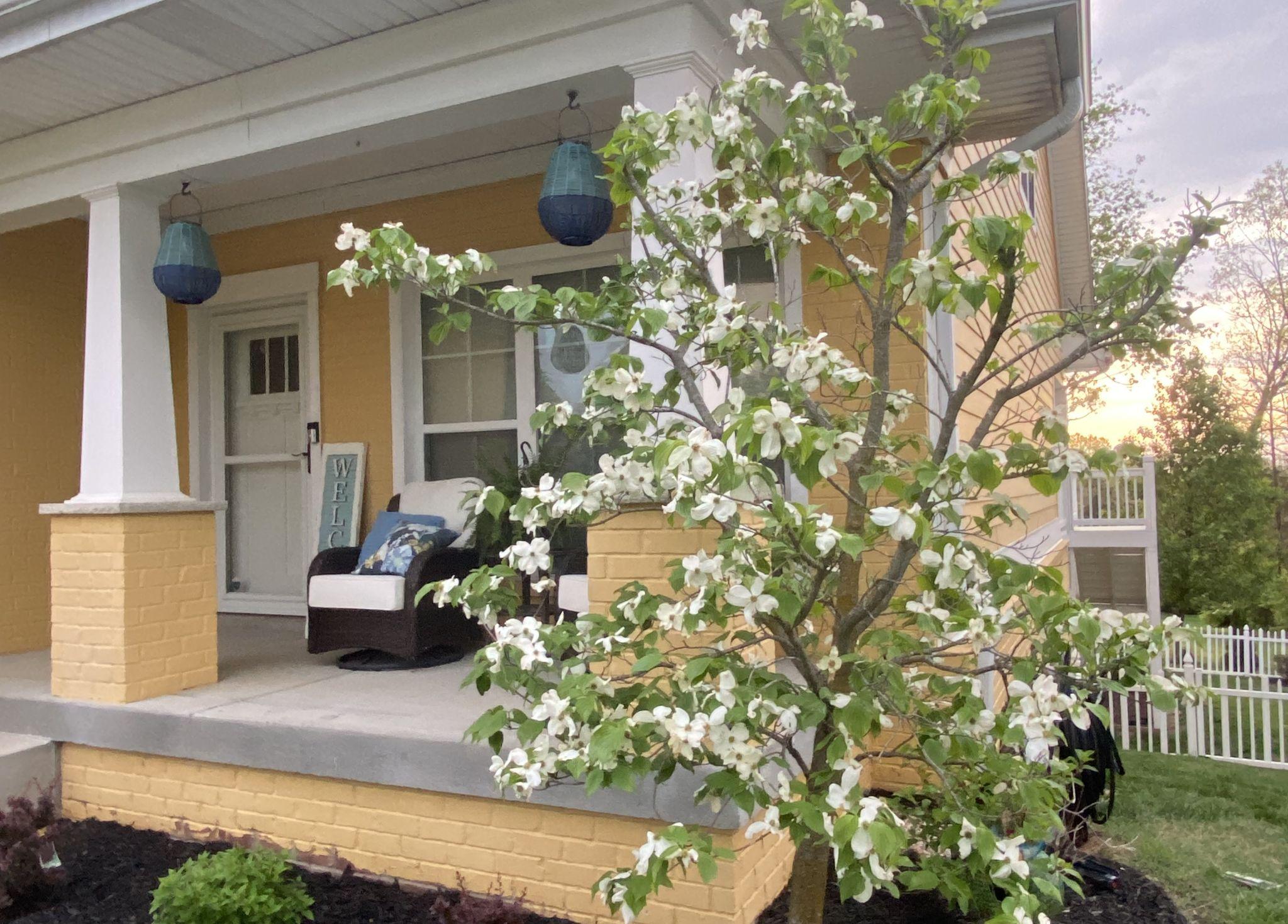 Photo by Nancy Burgess
Hello Writers!
Spring has come alive!
Birdsong echoes through the morning air. The sky stretches wide, blue and white, the warm sun rests gently on my face, and the breeze carries the fragrant scent of awakening flowers. I sit on my porch, taking it in, when my gaze is drawn to something in bloom.
My dogwood tree.
She has finally declared herself awake from the harsh winter. She smiles delightfully, her white petals stretched wide open. I remember studying her brittle branches and wondering if she would make it through another season. Seeing her now, vibrant and unapologetically alive, feels like witnessing a comeback.
But last year told a different story.
I had to get up close to really look at her. She was showing signs of distress but was unable to articulate what was wrong. Instead, she showed me. Her leaves were wilted, stained with golden-yellow spots. Most alarming were the sunken wounds along her outer branches, open sores. Cankers, caused by a fungus slowly consuming her strength.
I still wonder how long it had been there before I truly saw it.
So, I did what needed to be done. Gloves on, shears in hand, I began to cut four to six inches below each wound, just as instructed. When I was finished, my poor tree looked stripped down and uneven, like I had taken too much. It felt excessive. Cruel.
Standing at the edge of the sidewalk, staring at what remained, I asked myself a question:
What parts of my own life have I been holding onto that are preventing me from blooming?
Before winter, I treated her. I fertilized the soil. Then I waited.
Growth, it turns out, requires both action and patience.
Because the truth is, it is difficult to see our own damage. The wounds we carry do not always announce themselves. They linger quietly at the edges, shaping us in ways that we don’t immediately recognize.
My circle of people closest to me could see it clearly. I could not.
I was holding onto a version of myself shaped by old wounds, with roots tracing back to childhood abandonment. It showed up as overthinking, overanalyzing, and overfunctioning, along with a need to be validated and affirmed.
I had created a narrative that told me I was not good enough. That if I were perfect, stayed quiet, kept everything together, and avoided conflict by appeasing and over-apologizing, then I would be enough. Then he wouldn’t leave.
At first, that “he” was my father, whose absence shaped more than I realized. Over time, it became the men I loved.
My best friend saw through it. Gently, without judgment, she said, “I wish you would stop looking back and start looking forward.”
At the time, I felt defensive. I wasn’t ready to accept her words. I was still grieving my divorce and sorting through what had been lost. But time has a way of softening resistance.
I see that now.
My brother also told me something that lingered: that I take on too much accountability.
He was right.
I carried responsibility for things that were never mine to hold because I believed that if I could fix it, contain it, control it, I could somehow keep everything from falling apart.
It was slowly eating away at me, like the diseased branches on my tree.
There is a story in the Bible, in Exodus Chapter 14, about God leading the Israelites out of slavery and toward freedom, but not on the most direct route. God knew that if they encountered resistance too soon, they would turn back. Even after He parted the Red Sea, even after witnessing miracles, they still longed for what was familiar.
Even when familiar meant bondage.
That makes sense to me now.
There were moments when I wanted to return to what I knew, not because it was healthy, but because it was familiar. Moving forward meant stepping into the unknown. That kind of uncertainty can be paralyzing.
Cutting back my tree felt like that.
It felt like loss. Like damage. Like risk.
But doing nothing would have guaranteed the outcome I feared most.
Somewhere along the way, I shifted my thinking. I stopped asking “Why did this happen to me?” and started asking, “What is this teaching me?”
What am I feeling?
What am I learning?
What am I becoming?
That shift changed everything.
Because growth is not about what we have lost. It is about what we’re willing to release, what we choose to nurture, and what we allow to grow in its place.
Last season, she did not bloom at all. Now she stands tall, her blossoms carrying the faint scent of honey, her branches full and alive.
She no longer resembles what she endured.
And neither do I.
~Nancy Burgess
UPCOMING MEETINGS
Our May 12th meeting will be from 6:00 PM to 7:30 at the St. Matthews Library at 3940 Grandview Ave 40207.
If you would like a peer critique, email us () before [meeting date] at noon and describe your piece. Please bring 15 printed copies of the manuscript you want us to read. No more than 1300 words (4 to 4.5 pages double-spaced) for prose (excerpts of longer pieces welcome), or two pages of poetry.
To give all members an opportunity to read, priority for peer critique will be given to those who email us ahead of time and who have not read at a recent meeting.
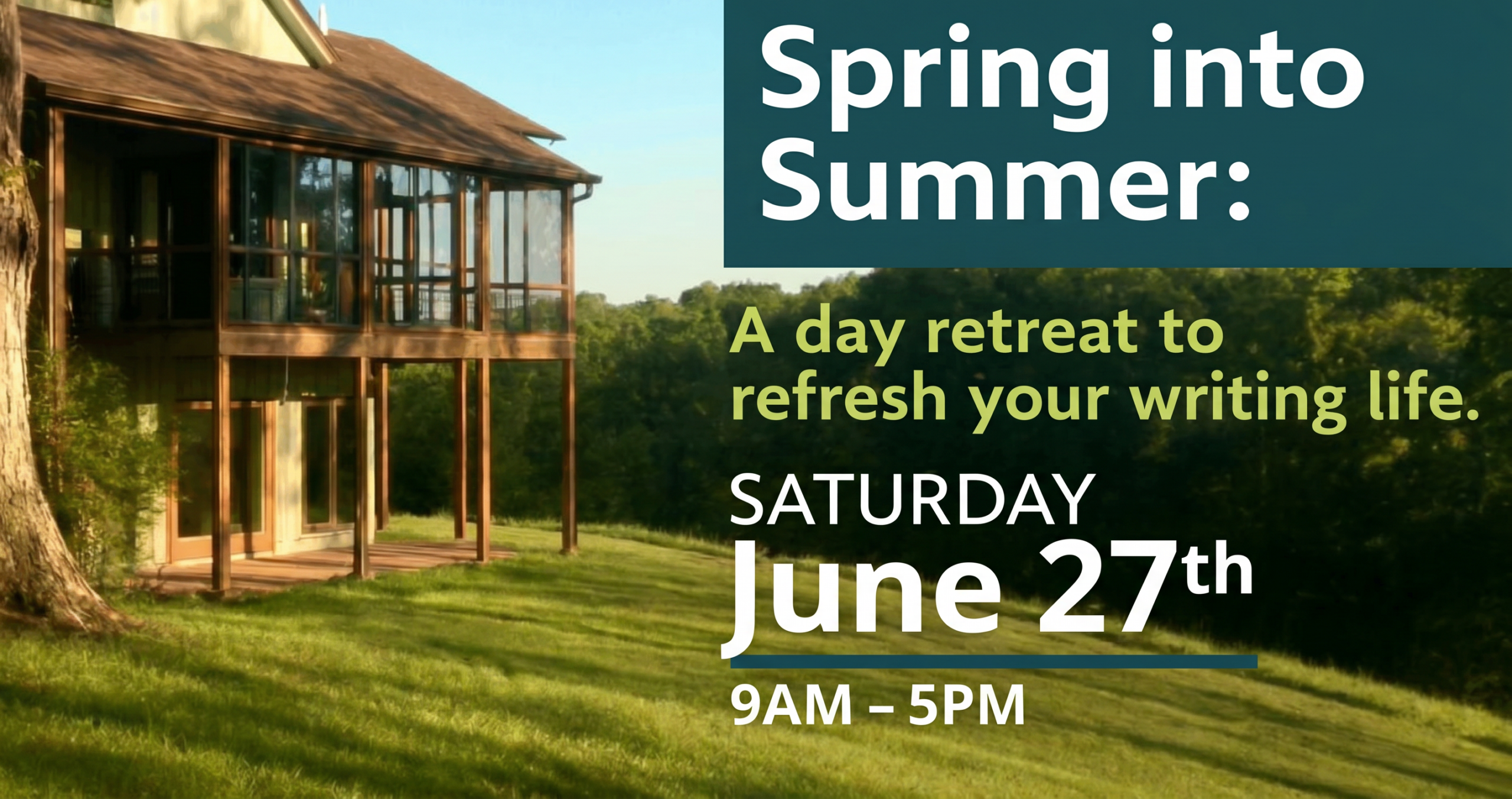
For June, we will have our second Tuesday meeting at St. Matthews library & a writing retreat at Valterra! More info to come.
WRITING PROMPT
There are seasons in our lives when growth requires letting something go. Write about an area in your life, or your character’s life, that needed to be pruned.
· What were the early signs that something wasn’t healthy or sustainable?
· What did it feel like to finally confront it? To cut it back?
· What did you or your character learn along the way?
· What shifted in you or your character’s perspective?
· What, if anything, began to grow in its place?
~Nancy Burgess
MEMBER SPOTLIGHT
Members, WWW wants to highlight the creative voices of our community. Send a short biography, headshot, and links to your author/poet accounts and website (if applicable) to . Additionally, share a favorite resource of yours for writing tips (like a podcast or social media account) and your most recent favorite read. We may spotlight you in a future newsletter!
WWW BLOG
Women Who Write has a blog on our website to showcase our community’s talent. We want to publish your writing or republish a recent publication of yours (given that reprints are permitted). Please send us your short stories, poems, and essays! No more than 2,000 words.
Browse our web blog now! Publishing on our blog will expand your writing platform. For more information, email and pitch your story or poem—the one you’ve written or the one you want to write! We may provide suggested edits, for flow and clarity.
SUBMISSION OPPORTUNITIES & LOCAL EVENTS
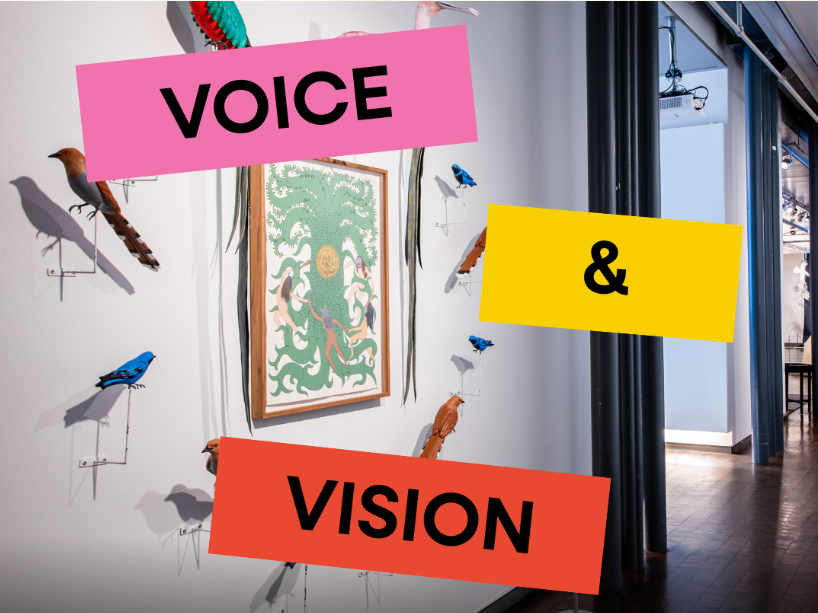
Spalding’s School of Writing Voice & Vision is back for the summer! Every third Thursday of each month provides an opportunity for writers to share samples of their work with each other and the public. Each month will feature a variety of readings by poets and writers with ties to Kentucky, along with a look at highlights from the current contemporary art exhibitions at 21c Louisville.
Regular local events:
- ‘Zine Lunch with Sarabrande Books, monthly on Fridays at noon
- Carmichael’s regularly hosts authors and poets in the evenings
Submission directories:
- Submittable
- Duotrope
- Poets and Writers’ list of literary magazines
- NewPages
Women’s publications seeking women writers:
- Landslide Lit(erary) (by WWW members Kimberly Crum and Bonnie Omer Johnson)
- HerStry, literary essay/memoir blog
- Ashes, an online magazine of personal essays
- Brown Sugar, online magazine for women of color
- Bi Women Quarterly, bisexual+ women’s publication
- Literary Mama, journal dedicated to motherhood
- Persimmon Tree, online magazine for women older than 60
- So To Speak, an intersectional feminist journal

SUPPORT OUR WRITING COMMUNITY!
Become a member or renew your membership—As a community, WWW strives to nurture your writing life. We hope you choose to join or renew as a member and participate in our monthly meetings, author talks, retreats, and workshops. Our membership coordinator will notify anyone due to renew. Regular annual membership is $50. Student annual membership is $25. Scholarships are available. Membership entitles you to discounts on workshops and retreats.
Attend our monthly member meetings on the second Tuesday of each month for a brief program, peer critiques, and conversations about the writing life. Not currently a member? You can attend two meetings before deciding to join.
Visit our webpage WomenWhoWrite.com.
Visit our Facebook Page—@womenwhowriteky. Don’t forget to like us and follow us.
Thank you, WWW members, for joining our nonprofit group, for sharing your unique voices, and for supporting each other with open hearts and minds.
Your Leadership Team
Megan, Erin, Holly, Liz, Irene, and Nancy